In my last post I mentioned an upcoming pre-concert lecture I was giving at the San Diego Symphony. So, you might ask, how did it go, and what did I learn? More importantly, what can we all learn as we strive to improve our communication skills? In the weeks leading up to the talk I had focused on the organization that invited me, the audience, and the logistics. Let’s briefly rehash these areas here.
About Me
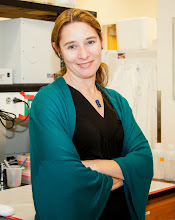
- Allison Coffin, PhD, DTM
- I'm an assistant professor of neuroscience at Washington State University in Vancouver, where I use tiny zebrafish (the size of an eyelash!) as a model system to study human hearing loss and how we can prevent it. I'm also a long-time Toastmaster and I teach communication workshops. This blog represents the merging of my two passions - science and communication, which has really become one central passion - the science of communication. There's a revolution in science right now...the idea that we scientists should sometimes leave the lab and talk about what we do, and why we do it, to real people. This blog looks at why we should do this, and how to actually talk about science with non-scientists (and with each other!). Portions of this blog are also featured on Qualia, the AAAS MemberCenter blog site.
Sunday, April 17, 2011


Friday, March 25, 2011
Preparing for an upcoming talk: what do I need to know?
On April 7th I’m giving a public talk before a performance of the San Diego Symphony featuring solo percussionist Dame Evelyn Glennie (feel free to stop by if you’re in the area!). This gives me a good opportunity to discuss some of the things I try to plan in advance of a talk, particularly one in a new venue where I have limited information prior to the event.
Thursday, March 17, 2011
Step out!
We scientists love to hide behind our data…”the data shows”, “our data suggests”. When we give talks, we also love to hide behind the lectern, again letting the data speak for itself. But if you’re reading this blog, you know (at least I hope you know!) that the data doesn’t speak for itself. It’s up to us to do the talking, the inspiring, the explaining. And in order to inspire, to explain, we must connect with our audience.
Saturday, February 26, 2011
Recipe for enthusiasm!
I just attended the mid-winter meeting of the Association for Research in Otolaryngology, which is the big conference in my field (basically, hearing-related research). I heard some great research talks, and some not-so-great talks, which is pretty typical for a conference. While I won't single anyone out, the great talks all had one thing in common - enthusiasm! Whether a high-ranking professor or a new graduate student, the talks given with enthusiasm and passion all caught my attention.
Sunday, February 6, 2011
Fight those filler words
Whether it’s a scientific talk or a wedding toast, what we say is important. Just as important, though, is what we don’t say. Filler words-those “ums”, “ahs”, “likes” and “you knows”, take power away from our words, as the audience fights to stay on course, to understand our message, while dodging filler word obstacles.
Sunday, January 30, 2011
Get Engaged! Great public science talks in Seattle
Calling all science fans (nerds, closet nerds, hipsters, etc.) living in the Seattle area...want to hear about some great cutting-edge science in an understandable way? The University of Washington Engage Science speakers series features UW researchers talking about their work in an informal evening setting. This year's series kicks off on Wednesday, Feb. 2nd at 7 PM with an astronomy presentation that's sure to please.

Charlotte's talk will be in Johnson Hall, Room 075, UW Seattle Campus. Come learn how stars are born!

Charlotte's talk will be in Johnson Hall, Room 075, UW Seattle Campus. Come learn how stars are born!
Monday, January 24, 2011
Scientific Characters
In a previous post I introduced the idea of telling stories within a scientific talk - using techniques such as plot, character development, climax, and resolution to make science (and scientists!) come alive.
Today I want to highlight a recent example of a terrific scientist who also tells a great story. A few months ago I attended a talk by Dr. Douglas Green from St. Jude Children’s Research Hospital. Doug studies the intricacies of cell death signaling, which can be a bit of a dry subject even to the aficionado. This was a lunchtime seminar full of cancer researchers, neuroscientists…in short, serious researchers prepared to dive in to the topic. And then Doug told us a story, complete with characters, conflict, and (perhaps) resolution.
This was no bedtime story, though. Embedded within the story was some serious science, as two groups of researchers presented different models for how specific cell death signaling molecules interact to promote cell death or survival. Doug described the tension at meetings as each group presented evidence for their model and tried to discredit the other side. After hearing about the conflict I was eager for a resolution-which group was right? He then led us through data from his lab that, depending on the circumstances, partially supported each model, and told of the triumph as each research group in the conflict gloated and sulked in turn.
At the end of the hour I had a deeper understanding of cell death signaling without the usual post-talk sleepiness I often feel. Instead, I was energized, having learned a lot and been entertained at the same time. Even in a room full of scientists, it’s best to tell a story. Have you heard great examples of scientists that use storytelling elements? Share your story with us!
This blog post also appears on Qualia, part of AAAS MemberCentral.
Subscribe to:
Posts (Atom)