About Me

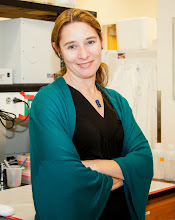
My photo
I'm an assistant professor of neuroscience at Washington State University in Vancouver, where I use tiny zebrafish (the size of an eyelash!) as a model system to study human hearing loss and how we can prevent it. I'm also a long-time Toastmaster and I teach communication workshops. This blog represents the merging of my two passions - science and communication, which has really become one central passion - the science of communication. There's a revolution in science right now...the idea that we scientists should sometimes leave the lab and talk about what we do, and why we do it, to real people. This blog looks at why we should do this, and how to actually talk about science with non-scientists (and with each other!). Portions of this blog are also featured on Qualia, the AAAS MemberCenter blog site.

Wednesday, July 25, 2012

Zombie science


Who remembers Monty Python’s Quest for the Holy Grail?  “Bring out your dead, bring out your dead…” How about bringing out the undead - into the scrutiny of neuroscience? The new field of zombie neuroscience combines the public zombie obsession with serious science aimed at teaching the public about brain research through the lens of zombie behavior.

Zombies are hot right now; a friend recently ran a 5K race that involved dodging zombies en route to the finish line.  Postdoc Bradley Voytek and Assistant Professor Timothy Verstynen use this zombie epidemic to their advantage, using bona fide neuroscience concepts to postulate how zombie brains are different from normal humans.  They’ve spoken at Comic Con and other popular venues and they are advisory board members of the Zombie Research Society (who knew?).

Yes, zombie research won’t get you tenure, and Comic Con isn’t exactly an AAAS meeting. But reaching the public in an interesting, meaningful way is important!  What tools or cultural trends do you use to make science relevant?  Are zombies an appropriate outreach subject for serious scientists?  Weight in!

Monday, July 2, 2012

Scientific writing: motivating or monotonous?


Let’s leave speaking aside for a moment (or several long moments, considering I haven’t posted anything for months!) and instead dip into the written word. In science, our success depends on our writing, generally in the form of scientific papers that serve as the currency of our world. Often those papers are formulaic: the introduction says how the topic/question at hand isn’t fully understood, the methods expound in (often) boring, third-person detail what we did and how we did it, the results tick off our hypotheses as each is upheld (like we really know what would happen!), and the discussion tells people how brilliantly we’ve added to our field by finding something novel.  Always “novel”…”new” just isn’t new enough.  Someone once sent me a great tongue-in-cheek article about how to write a formulaic paper (like scientific Mad-Libs)-anyone out there in cyberspace have a copy?

A new book challenges the assertion that academic writing must be jargon-y and archaic.  Stylish Academic Writing by Helen Sword showcases examples of bland, traditional academic prose and contrasts them with vivid, exciting writing from a variety of disciplines.  I just ordered my copy-has anyone read it yet?  What did you think? 

Whether you plan to read her book or not, I think it highlights a divide in scientific writing: do we write to sound smart, or to engage? Can we do both in a single piece? How? And how do we change the culture of academic writing so it’s encouraged to both inform and entertain?

Sunday, April 15, 2012

Questions upon questions


The French Anthropologist Claude Lévi-Strauss once said, “The scientist is not a person who gives the right answers, he's one who asks the right questions.”  Still, as scientists we often have to answer questions as well…usually at the end of our talks when we’re tired and simply wishing for a nap, or perhaps a beer.

Monday, January 30, 2012

Three cheers for the honey badger?


Last week I introduced the Science Cheerleaders as one way to promote scientific careers and science literacy.  Today I offer up the viral youtube video about the honey badger as another option for science communication outreach.  For the three people that haven’t yet stumbled upon honey badger hysteria (you can even get a t-shirt, and the book version is due out soon!), here’s a short synopsis.

Saturday, January 21, 2012

Give me an “S”!


Most scientists are more comfortable in a lab coat than a sport coat, let alone a mini-skirt.  Today I want to introduce a group of (mostly) women that promote science to the public with shiny outfits and pom-poms.  Meet the Science Cheerleaders!

Picture courtesy of sciencecheerleader.com
These women are scientists, science educators, health professionals, and scientists-in-training.  Beyond their love of science, they share another common passion - cheerleading!  All are current or former cheerleaders at the college or professional level.  Their mission is to promote science and technology careers for girls, and to help educate the population at large about the important of science and technology in their lives.

As a science communicator, I think this is brilliant! What better way to attract attention to science, and raise girls’ interest in science careers, than with sparkle!  What about you?  Do you think the Science Cheerleaders (or other like them) help science? Why or why not?

Sunday, January 15, 2012

Smells like…science?


Don’t just tell your audience-let them see (and hear, smell, and taste) the experience themselves! In a recent Toastmaster Magazine article, author Colleen Plimpton implored us as speakers to use rich sensory language in our presentations and to engage multiple sensory modalities by offering up things for our audience to see, smell, maybe even taste. Ms. Plimpton uses these techniques for her lectures on gardening and garden design, describing the vibrant flowers and musty soil of her trade.

Wednesday, January 4, 2012

Great Seattle public science series!

Looking for great examples of effective public communication of science?  Or perhaps you just want to learn something new without delving into a specialty scientific journal?  Either way, check out the Engage Science Seminar Series, offered this year as part of the Seattle Science lecture series.

Looking for more tips and thoughts on science communication?  I promise to return to my usual non-regular blogging schedule soon!