About Me

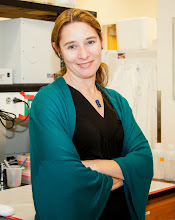
My photo
I'm an assistant professor of neuroscience at Washington State University in Vancouver, where I use tiny zebrafish (the size of an eyelash!) as a model system to study human hearing loss and how we can prevent it. I'm also a long-time Toastmaster and I teach communication workshops. This blog represents the merging of my two passions - science and communication, which has really become one central passion - the science of communication. There's a revolution in science right now...the idea that we scientists should sometimes leave the lab and talk about what we do, and why we do it, to real people. This blog looks at why we should do this, and how to actually talk about science with non-scientists (and with each other!). Portions of this blog are also featured on Qualia, the AAAS MemberCenter blog site.

Wednesday, August 10, 2011

Tools of the Trade


http://www.tantara.ab.ca/job_aids.htm
I’m currently remodeling my house, which is why I haven’t blogged recently!  All of this remodeling has led me to think about tools…specifically about having the right tools for the each job.  If I want to do something, like paint a wall, I use a paintbrush.  I don’t actually have to invent the paintbrush, or build it, but I can buy one and use it for my project.

Similarly, when we speak to the public (or even to other scientists), there are many successful tools that we can use to actively engage our audience.  A few months back I had a great chat with Anna Lakovitch from The Smithsonian Associates, an organization within the Smithsonian Institute dedicated to public outreach and education.  Anna and I discussed creating a toolbox of ready-made audience engagement tools that speakers could use to liven up public presentations, even make them (gasp) fun!

Thursday, June 30, 2011

Smart slides, smart audience


Standardized, easy to understand data slides can help your audience to grasp your talk and internalize your message.  They can also make your audience feel smart, because they can determine the take-home message of your slide before you mention it.  My previous post looked at how to effectively use text on presentation slides.  Here we’ll look at a few other features of a good slide-based presentation.

I recently attended Sean Georgi’s dissertation defense at the University of Washington.  Sean’s work features gorgeous multi-color fluorescent images and really interesting data on retinal development.  Here I want to highlight three tools that Dr. Georgi used during his talk to enhance audience understanding. I've pointed out several of these features on one of Sean's slides, shown on the left.


Wednesday, June 15, 2011

Texting by PowerPoint


I’ve talked a lot in this blog about how to structure and deliver a great scientific talk (and there’s more to come!), but it’s time to tackle the elephant in the room (or perhaps the elephant on the screen)…PowerPoint and other computer-generated visual aids.  We all use them, and I’ll be the first to admit that visual aids are useful.  Imagine describing a multi-year trend in climate data or the location of a protein inside a cell without an accompanying visual…possible, perhaps compelling, but tricky.

Thursday, June 2, 2011

Put your money where your mouth is


Sometimes even the most well-intentioned science communicators need a little incentive. The Center for Media and Interactivity at Justus Liebig University provides just such an incentive with their competition Performing Science 2011.  The goal of this contest is to recognize scientists and other academics for true performances that incorporate modern technology and that entertain even as they instruct.  And the best performance is rewarded – to the tune of 5,000 euros!

I think this contest raises some interesting points.  Should we strive to entertain during our talks? What is the difference between a talk and a performance?  When we enter the public arena, are we performing?  What do you think?

Monday, May 2, 2011

What’s in a number?


We scientists love numbers…maybe it’s because we liked math when we were kids, or because we understand that putting a number to something is powerful-it allows us to understand the magnitude of something, or to make quantitative comparisons between things.  We can use numbers to calculate the distance to the moon, or compare the number of wolves in different populations across the western U.S. Really, the possibilities are almost endless!

Sunday, April 17, 2011

San Diego Symphony talk: the recap


In my last post I mentioned an upcoming pre-concert lecture I was giving at the San Diego Symphony. So, you might ask, how did it go, and what did I learn?  More importantly, what can we all learn as we strive to improve our communication skills?  In the weeks leading up to the talk I had focused on the organization that invited me, the audience, and the logistics.  Let’s briefly rehash these areas here.

Friday, March 25, 2011

Preparing for an upcoming talk: what do I need to know?


On April 7th I’m giving a public talk before a performance of the San Diego Symphony featuring solo percussionist Dame Evelyn Glennie (feel free to stop by if you’re in the area!).  This gives me a good opportunity to discuss some of the things I try to plan in advance of a talk, particularly one in a new venue where I have limited information prior to the event.